LensPrompt · Practical guide
Understand Portrait Lighting Prompts
Use direction, softness, and background separation to make portrait prompts easier to control.
“Cinematic lighting” can point in many directions. A more useful portrait brief says where the light comes from, how it wraps around the face, and what happens behind the subject. Use the source images to compare those choices before borrowing their wording.
Start with four steps
Locate the main light
Look for the brightest side of the face and the shape of the shadows. Choose one dominant direction: beside a window, a streetlight to one side, or soft overhead daylight.
Choose a shadow character
Describe a soft transition or a distinct edge. Avoid stacking incompatible instructions such as even shadowless light and dramatic deep facial shadows unless you explain the relationship.
Separate face and background
Decide whether the subject should stand out through brightness, color, depth of field, or a quieter background. State the most important cue instead of asking for every effect at once.
Compare before adding style
Inspect the generated face and background first. If the light direction is wrong, adjust that instruction before adding more film, lens, or atmosphere words.
Night street: two sources, different jobs
Night Street Editorial Portrait combines warm streetlight with a subtle red neon spill on one side of the face. It also asks for blurred car lights and an atmospheric city background. The streetlight describes the main illumination; the neon adds a color accent; the bokeh describes the background.
If you want a quieter version, reduce the accent or remove competing signs in a separate adaptation. Changing the jacket and adding a new camera name will not necessarily solve a face that is lit from the wrong direction.
Café window: compare the face to the room
Paris Café Window Portrait offers a different reference: an eye-level subject inside a warm, dim café. Open the image at full size and compare the brighter face with the darker setting. Read the entire source prompt before treating a short excerpt as the complete recipe.
For your own brief, define whether the window is to the left or right, whether the subject looks into it or toward the camera, and how visible the café should remain. Keep those relationships consistent across the sentence.
Use softness and contrast deliberately
Softness describes the transition at a shadow edge. Contrast describes the difference between bright and dark areas. A portrait can have soft light and still have a dark background; those instructions do not have to cancel one another.
Pick a useful pair such as soft side light with gentle shadow detail. Avoid a pile of near-synonyms that makes the intended result harder to judge. If the result is too flat, revise the contrast relationship rather than asking for a different face.
Keep identity and technical claims modest
Changing light may also change the way a generated face appears. Text alone is not an identity-preservation workflow. If you need consistency with a particular person, use an authorized reference and the actual capabilities of your chosen tool.
A focal length or aperture inside the prompt describes an intended photographic look. It is not a record that a real camera was used, and it is not a verified setting in the model. The source tool information here has not been independently reproduced.
A separate working version
What an adaptation can look like
Editorial adaptation, not generation-tested: An eye-level portrait of an adult ceramic artist beside a café window. Broad soft window light enters from camera left, gentle shadow detail on the opposite cheek, warm dim room behind, natural skin texture, quiet expression, uncluttered background.
The change makes light direction and background relationship explicit. It does not claim to reproduce either source portrait or preserve the identity of its subject.
See the whole record
Explore the source examples
These images belong to the source records. They are not results generated from the adaptation above.
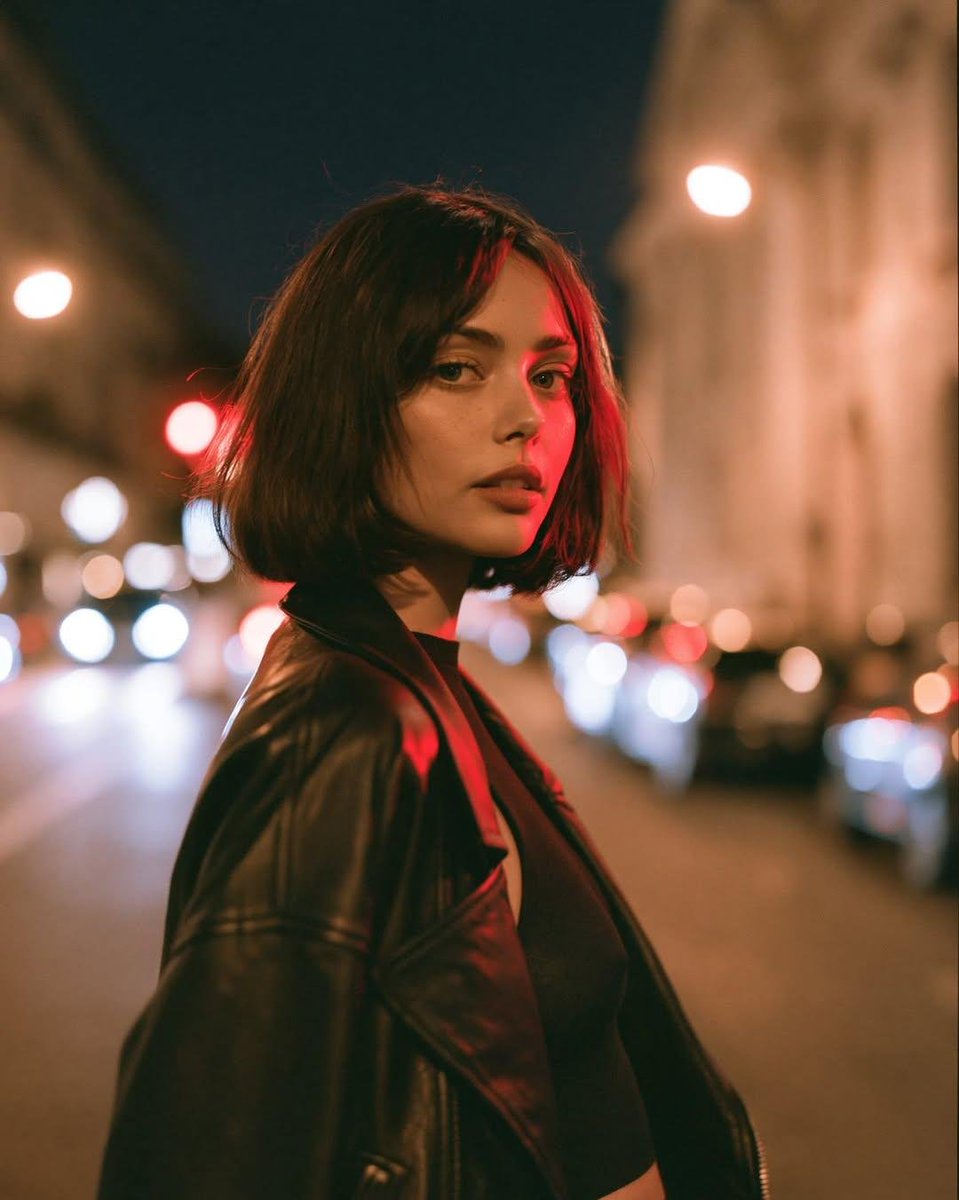
Night Street Editorial Portrait
@GoodmanprotocolOriginal source excerpt
Photorealistic cinematic night portrait of a young woman standing on a city street, softly lit by warm streetlights and subtle red neon spill light across one side of her face. She has a sleek shoulder-length brunette bob, refined natural features, and wears a black leather jacket over a dark top. She looks toward the camera with a calm,Read the full original prompt
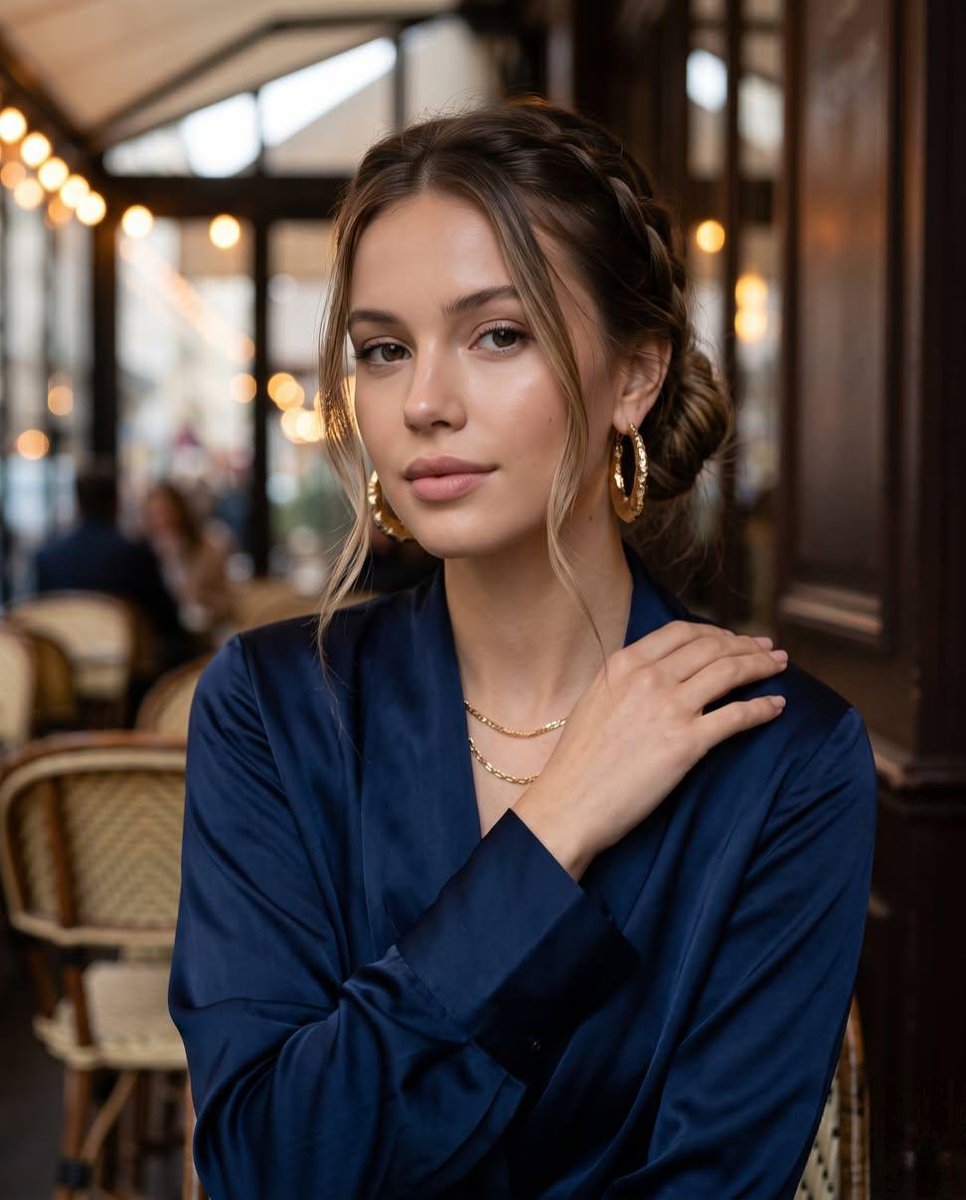
Paris Café Window Portrait
@laviniavelleOriginal source excerpt
A high-resolution photorealistic eyelevel portrait of a stylish young Caucasian woman sitting in a warm, dimly lit Parisian café She has a serene gentle expression with soft brown eyes looking directly at the camera Her dark blonde hair is styled in an elegant braided updo bun with delicate face framing strands falling around her face SheRead the full original prompt